
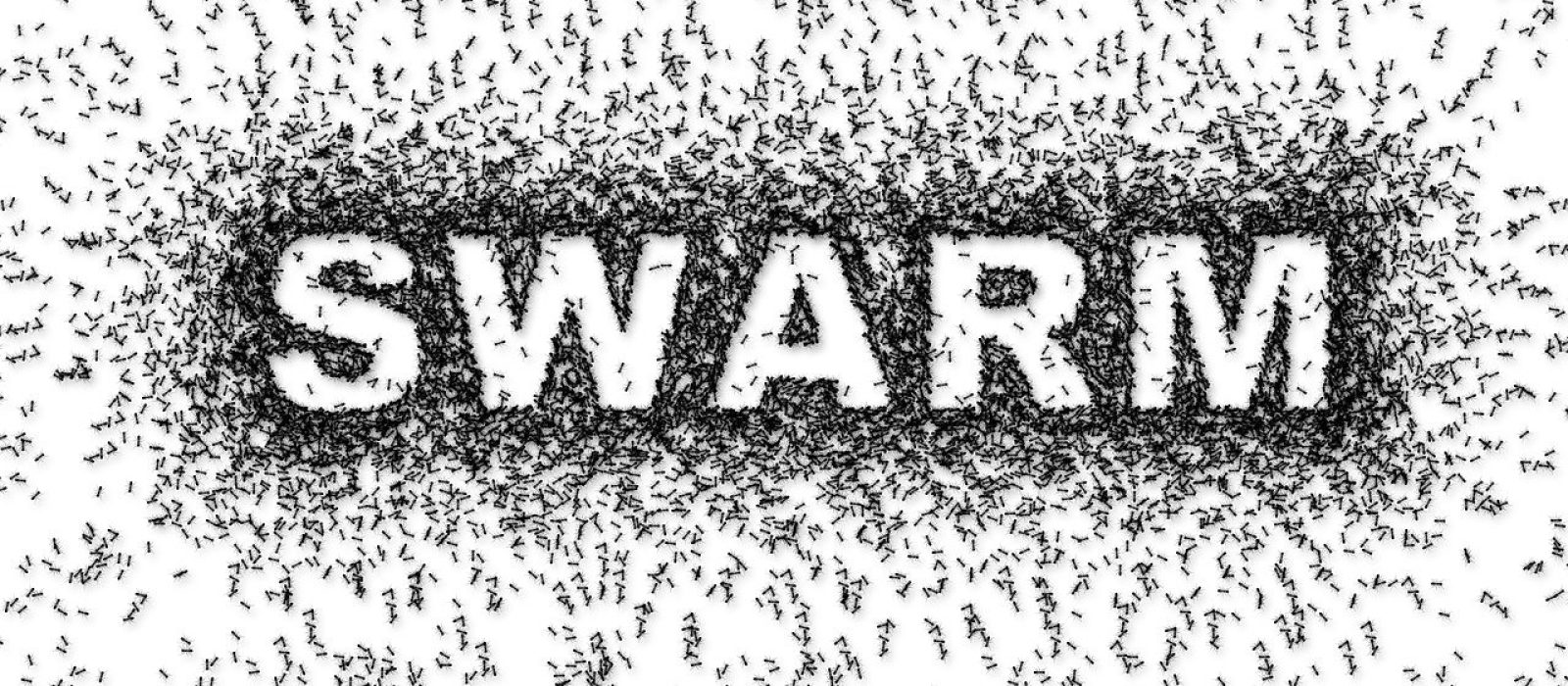
Swarm AI (Swarm Intelligence) is an advanced form of artificial intelligence that mimics the behavior of natural swarms — like birds flying in formation, fish swimming in schools, or ants finding food. It combines the collective intelligence of multiple agents (or systems) to make smarter decisions, solve complex problems, and adapt quickly to changing environments.
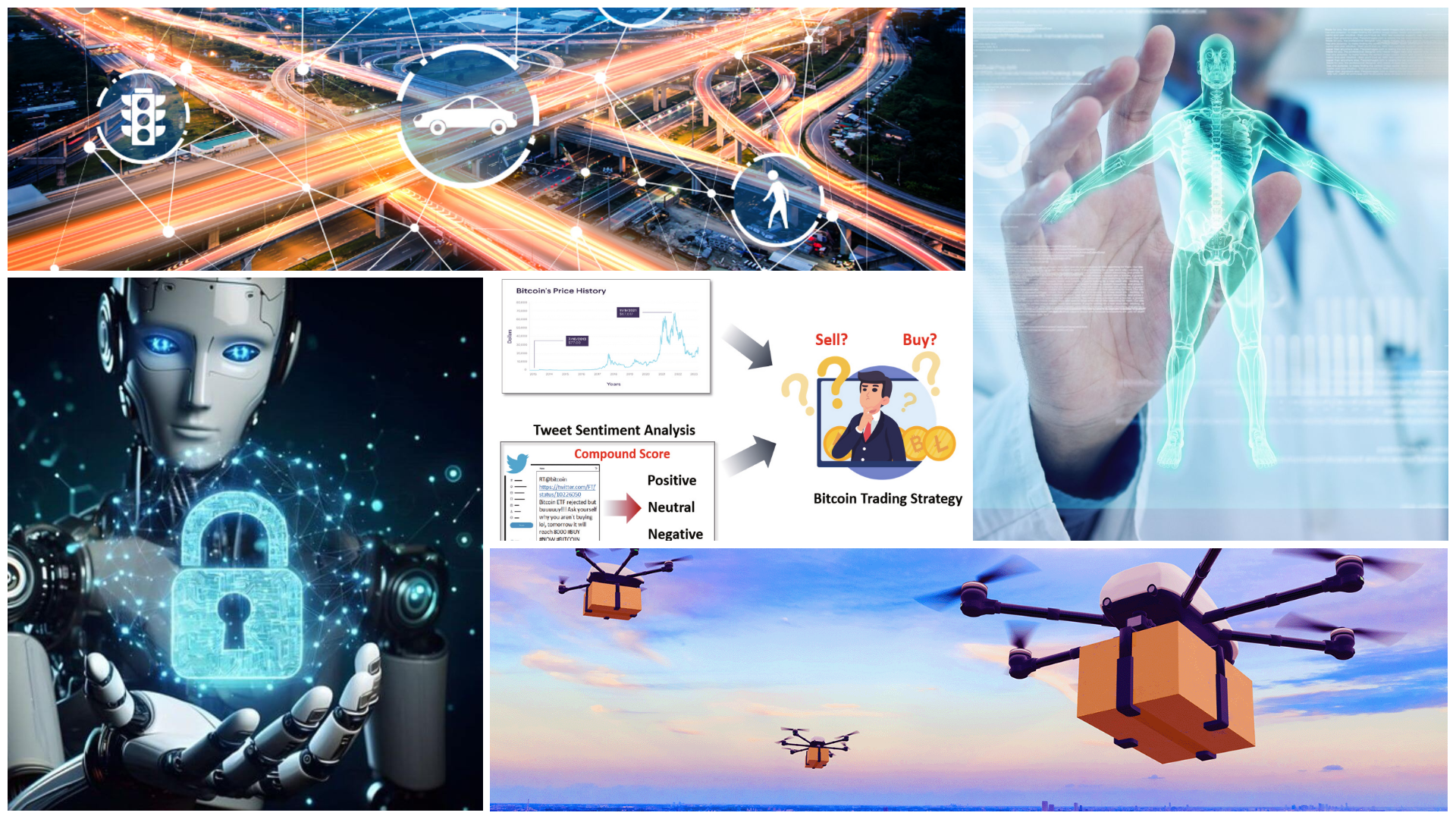
Real-World Applications of Swarm AI
Robotics: Drone swarms for surveillance or delivery
Healthcare: Diagnosing diseases using collective data analysis
Finance: Real-time trading strategy adjustments
Cybersecurity: Detecting and responding to threats together
Smart Traffic Systems: Managing traffic flows efficiently
How Does Swarm AI Work?
Swarm AI systems are inspired by nature — think of how birds flock, fish school, or ants find the shortest path to food. The core principles include:
Decentralized control – There’s no single leader making all the decisions. Each agent (robot, sensor, or software entity) operates independently, yet contributes to the shared objective. This makes the system more robust and resistant to single points of failure.
Simple rules – Every agent follows a set of basic instructions, such as “move toward neighbors,” “avoid collisions,” or “share discovered information.” Even with simple rules, complex group behavior can emerge.
Collaboration – Agents constantly share data and partial decisions with one another. This collective knowledge helps the swarm solve problems faster and more efficiently than an isolated agent could.
Real-time adaptability – The system reacts instantly to changes in the environment, such as obstacles, new data, or evolving goals. This adaptability is ideal for unpredictable scenarios.
Emergent intelligence – While each agent is relatively simple, their interactions create sophisticated patterns and solutions that were not explicitly programmed — a phenomenon known as emergence.
Scalability – Adding more agents often increases performance rather than slowing the system down, making Swarm AI suitable for large-scale tasks like environmental monitoring, search-and-rescue, or traffic management.
In essence, Swarm AI works like a highly synchronized, self-organizing team where local decisions, shared knowledge, and adaptability come together to create a powerful, collective intelligence.

Key Features of Swarm AI
High adaptability – Swarm AI can quickly adjust to new data, changing environments, or unexpected challenges without the need for a complete system reprogramming.
Scalable performance – Whether operating with just a few agents or thousands, the system maintains efficiency and often improves with more participants.
Resilience and fault tolerance – The system doesn’t rely on a single point of control. If one or several agents fail, the rest seamlessly take over, ensuring uninterrupted operations.
Fast, distributed decision-making – Because agents process information locally and share results instantly, the swarm can make collective decisions in real time — ideal for time-critical scenarios.
Cost-effectiveness – Using multiple simple agents is often cheaper than building a single, highly complex centralized system, reducing both hardware and operational costs.
Emergent problem-solving – Complex and innovative solutions can arise naturally from the interaction of simple agents, without explicitly programming every possible outcome.
Self-organization – Agents can arrange themselves into patterns or formations without human intervention, allowing for tasks like area coverage, coordinated movement, or resource allocation.
Robustness in uncertain environments – Swarm AI thrives in unpredictable or noisy conditions, making it suitable for search-and-rescue, environmental monitoring, or defense applications.
Why Swarm AI Matters Today?
Swarm AI stands out for its execution precision, speed, and adaptability. In a world where data changes every second, Swarm AI offers an intelligent, flexible, and powerful approach to solving problems — inspired by nature, driven by collaboration.
